Patzcuaro: Doorway to Heaven

Patzcuaro, Michoacan, Mexico

Patzcuaro, Michoacan

Patzcuaro, Michoacan

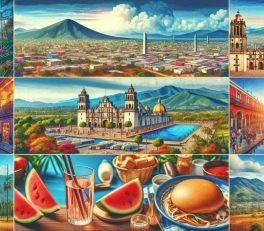
The picturesque colonial town of Pátzcuaro sits in the coolness of the Michoacan hills at an elevation of about 7,200 feet. Its name in the local Purepecha dialect has been translated as the “doorway to Heaven”. You can easily walk practically anywhere in this town (though there are hillsides to scale) and in fact taking a tour on foot is the best way to really appreciate the lovely old buildings along the narrow streets, the arches and commanding facades around the two town squares, Plaza Don Vasco de Quiroga and Plaza Gertrudis Bocanegra, the market, located right off the latter plaza, and the many small crafts shops accessed through small doorways in thick stone and plastered walls.

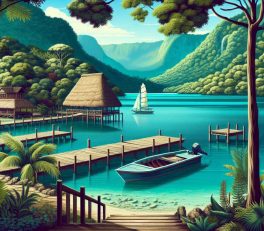
Patzcuaro sits on a slope rising from the shores of Lake Patzcuaro, known for its butterfly-net fishermen, its white fish and its several islands… the largest being Janitzio, with its village crowned by 40-meter-high statue of Jose Maria Morelos y Pavón, hero of Mexican Independence. Passenger boats transport visitors to the island and back during daylight hours from Patzcuaro’s piers.

The island of Janitzio’s church and graveyard are special places of pilgrimage during the festivities of the Day of the Dead and All Saint’s Day on November 1st and 2nd, and Patzcuaro itself is host to particularly notable Easter (Holy Week) festivities rich in tradition and color.

The Pátzcuaro area and many of the nearby villages are well known for their profusion of arts and crafts, particularly rustic, carved wooden furniture  and masks, straw mats and basketry, and its colorful woven textiles.

Pátzcuaro is accessible from Morelia to the northeast or Uruapan to the southwest via new highway 120 or the longer, old highway 15.

The Weather in Patzcuaro

Due to its altitude, Pátzcuaro and the villages surrounding the lake can be extremely chilly at night and early morning, particularly between October and April. Pátzcuaro is a perfect place to experiment with “the layered look” – dressing in the cold of the morning with first a light T-shirt and jeans, then layering on a sweater, then a jacket, then perhaps a shawl or scarf around the neck. Don’t forget warm socks and sturdy, comfortable, walking shoes – even gloves! During the course of the day, you’ll find that the rays of the sun coming through the rarified atmosphere will warm you up considerably, and bit by bit you’ll be able to divest yourself of your layers, staying comfy throughout the day. Take along a string shoulder bag to tuck your discarded layers into, because as soon as the sun goes behind the low buildings of the town, you’ll be wanting to start the reverse immediately.

Most of the hotels do not have heating. Many do have fireplaces in the old, high-ceilinged rooms, though, and you’ll most likely be provided with a small supply of wood and a couple of pieces of pitch-sticks that readily light and serve to kindle the rest of the wood. A lot of the fireplaces don’t throw off a great deal of heat, either – consider yourself lucky if you come across one that heats the room instead of just the chimney-flue.

Morelia Uruapan

Click for Morelia, Mexico Forecast

Click for Uruapan Gen Rayon, Mexico Forecast

Patzcuaro Attractions:

Basilica de Nuestra Señora de la Salud – Dating from 1554, the Basilica, situated on the hillside 2 blocks east of the large square, houses the Virgin of Health, dating from 1547 and created from a mix of crushed cornstalks and wild orchid extract. She is paid homage yearly on May 8 and Dec. 8. Offerings are left to Our Lady of Health on these feast days, consisting of short notes requesting favors or thanking the Virgin for favors granted,  milagros - tiny figures made of silver and other metals, depicting parts of the body (the head, heart, an arm, a leg, an eye) as well as insects and animals (pigs, chickens, dogs, cats, scorpions), house and cars. These offerings are often attached at the Virgin’s back, accessible via two small sets of stairs.

Casa del Gigante – Portal de Morelos 40, Plaza Don Vasco de Quiroga – One of Pátzcuaro’s oldest residences. Built in 1663. Its name, House of the Giant, stems from its large statue of a soldier.

Casa de los Once Patios – House of Eleven Patios – Between José María Cos and Enseñanza streets. This ex-convent now is home to the Casa de las Artesanías de Michoacán – a collection of shops selling all sorts of regional crafts.

Market – The food market just off the Plaza Gertrudis Bocanegra also features crafts in copper, wood, straw, clay as well as textiles such as sweaters, shawls and rugs.

Museo de Arte Popular y Arqueología – The Museum of Popular Art and Archeology is housed in what used to be the Colegio de San Nicolás, built in 1540, 2 blocks south of the Basilica.

Palacio de Huitzimengari – On the north side of Plaza Don Vasco de Quiroga, the Huitzimengari Palace was constructed by the Spaniards for the Tarascan Emperor. Now the seat of a group of local artisans and their crafts.

El Sagrario – Once the parish and sanctuary of La Virgen de la Salud, this 17 C structure is protected by a massive, attractive arched wall. El Sagrario is located next to the Casa de los Once Patios.


Hotels and accommodations in Patzcuaro, Michoacan, Mexico


Other Nearby places of interest:

Through the Eyes of the Soul, Day of the Dead in Mexico – Michoacan (Through the Eyes of the Soul, Day of the Dead in Mexico) Rereading the Conquest: Power, Politics,and the History of Early Colonial Michoacan, Mexico, 1521-1565

Originally posted 2009-10-06 10:35:35.

Share and Enjoy:
  • Print
  • Facebook
  • Google Bookmarks
  • email
  • StumbleUpon
  • RSS
  • Twitter

You must be logged in to post a comment.


  • Explore Mexico
  • Mexican Culture and Traditions
  • Mexican Food and Gastronomy
  • Mexico Flora and Fauna
  • Sports and Activities